
Wednesday, December 17, 2014
Semester Final Write-Up
Tea has remained one of the world's most popular drinks for many centuries. It originated in China several thousand years ago, though its precise origins are unknown. This uncertainty caused myths to spring up surrounding tea's discovery, such as the idea that Siddhartha Buddha created the plant. Around the 17th century, tea made its way to Europe with the help of explorers. Despite this, Europeans still had no idea how to make it. In an effort to reduce its dependence on China, the East India Company sent Scottish botanist Robert Fortune to steal tea seeds to be planted in India, which the company controlled at the time. Tea has since made itself an established presence as a global commodity, a and is available in all parts of the world.


Wednesday, December 10, 2014
The Right to Deprivation of Liberty, Property, Security, and Resistance to Oppression
The Enlightenment saw several revolutions dedicated to taking power out of the hands of the privileged few and giving it to the majority. These revolutions, most notably those in France and America, saw the emergence of certain documents guaranteeing certain rights to citizens. In the Declaration of the Rights of Man and Citizen, the National Assembly stated that "The aim of all political association is the preservation of the natural and imprescriptible rights of man. These rights are liberty, property, security, and resistance to oppression." Similar rights of the pursuit of life, liberty, and happiness are outlined by Thomas ajefferson in the Declaration of Independence. These documents were created to provide an alternative to the grossly unjust systems in place in the late 18th century. Yet despite these rights embedded in the history of the United States, there have been some shocking infringements upon them by the U.S. government itself.


Recently, reports on the torture techniques of the Central Intelligence Angency were brought to light. People who were incarcerated without due process have been waterboarded, beaten, frozen, and kept wake for days on end. But it is not only the mere brutality of the methods that presents a problem, but also the fact that those being detained have not been have not been granted the legal rights garunteed to them by the constitution. This is a clear violation of liberty, property, and security. While the argument can certainly be made that most other branches of the government were mislead concerning the going-ons at Guantánamo Bay and other such detention facilities, it must be remembered that it is the government's responsibility to maintain proper oversight, transparency, and accountability. Given that the CIA is a government organization and that other branches failed to prevent this unlawful and unconstitutional violation of rights (whether or not this was due to misinformation is irrelevant), the government is directly ignoring the ideals of the Enlightenment which founded it. Yet the inhumane treatment of prisoners by the CIA is not the only way in which the government has failed to acknowledge these rights. The protests against police brutality sparked by the deaths of Mochael Brown and Eric Gardner have been met with, shockingly, police brutality. While some of the protests in which the police used violence were little more than thinly veiled excuses for looting, others were merely demonstrations of citizen's displeasure with the status quo. When demonstrating against police brutality is met with force, the right to resist oppression is no longer taken into account.
While the Declaration of the Rights of Man and Citizen may not directly apply to the U.S., these rights should, looking at the issue from an idealistic standpoint rather than a realistic one, be universally maintained. In theory, these problems could be solved through more strict oversight, enforced regulation, and increased transparency and accountability for both the police and the CIA. While these were not necessarily guaranteed in the documents composed by revolutionaries, they were implied. For in order for these rights to be maintained, there must be a certain degree of regulation and accountability.
Monday, December 8, 2014
Thoughts and Reflections on Edmund Burke's Reflections on the French Revolution
Despite the Declaration of the Rights of Man and Citizens, not all were convinced of the sensibility of the French Revolution. Irish critic Edmund Burke made his displeasure with the revolution known in his famous essay Reflections on the French Revolution. His criticism stemmed partly from his perception of the National Assembly, which he considered deplorable by virtue of being made up of primarily lawyers. Burke did not count lawyers among the wisest of men, instead stating that the assembly should have been comprised of men of the cloth rather than those who had no grasp of the laws of God and nature. He doubted that such men as those who called themselves the National Assembly could ever pursue anything other than their own personal interests. He believed that under the rule of such men, conditions were far worse than under any monarch. Additionally, Burke implies that the inherent rights of men should be guaranteed outside of the government. Due to the esoteric and ever-changing nature of these rights, they cannot be effectively implemented by the government. 
Thoughts and Reflections on The Declaration of the Rights of Man and Citizen
The ideas put forth during the Enightenment by such thinkers and Locke and Rousseau became prevalent in newly formed constitutions. These ideas, primarily centering around equality and the inherent rights of man, were spelled out in the Declaration of the Rights of Man and Citizens. Apart from the revolutionaries in America, the National Assembly were the first to try to bring the ideas of the Enlightenment into government. Despite the sentiment expressed in this declaration however, the Fench Revolution was plagued by tyranny, wrongful executions, and general iniquities. During th Reign of Terror, Robespierre branded anyone who voiced the slightest anti-revolutionist ideals an enemy of the revolution and had them executed. After several decades of new monarchs and dictators, France eventually achieved the ideals laid down in the National Assembly's document.
Thursday, December 4, 2014
Thoughts and Reflections on The Human Story Chapter 13
Prior to the late 18th century, the idea of granting any political influence to the proletariat was unthinkable. Yet the political paradigm shift brought about by the Age of Enlightenment sparked several revolutions which did just that. In France, the working and rising middle classes were discontent to allow the nobility and clergy to continue squandering the treasury and living lives of luxury. This, coupled with a particularly bad harvest in 1789, led to the bloody French Revolution during which the monarchy was deposed and a constitution was instated to ensure the equality of all men, an ideal which had only been voiced in the recent Enlightenment. The Spanish American revolutions of the same time seem to have been sparked by similar ideals, with peasants being granted land and some revolutionists pushing for equality among whites and Indians. 

Salon Video, Script, and Works Cited
Link to video: http://youtu.be/LII-ovTIV2o
Works Cited:
Friend, Celeste. "Internet Encyclopedia of Philosophy." Internet Encyclopedia of Philosophy. Internet Encyclopedia of Philosophy, n.d. Web. 03 Dec. 2014.
Elahi, Manzoor. "Social Contract Theory by Hobbes, Locke and Rousseau." Academia.edu. Academia.edu, n.d. Web. 2 Dec. 2014.
Script:
Questions:
Could you give us an overview of your well known stance concerning the natural state of man?
Answer: all men are equal and free
Follow up question: are you suggesting that there should be no laws at all?
Answer: no, all men held accountable to laws of nature and God
How does the surveillance being conducted by the NSA violate your proposed social contract?
Answer: consent of the people, lack of awareness of the people, lack of transparency. Property, everyone owns themselves, to some degree a violation of personal property, implications of surveillance, etc.
But wouldn't you agree that in order for a government to function, citizens must give up certain freedoms?
Answer: While there is a trade, it is inordinate. The people must consent to this trade.
How would you say your social contract theory could be applied to create a better system?
Answer: more transparency from government
anchorman
Mac (1) welcome back to (Macs Important news station. Today's top story, the NSA leaks on internet surveillance recently brought to light by whistleblower Edward Snowden.
Mac (3) That's right Mac. Snowden released top secret documents about NSA surveillance which caused
an uproar from not just America, but most of the world. among the documents that were leaked were some detailing the extensive collection of metadata by the National Security Agency.
Mac (2) here with us tonight to discuss the issue
is renowned philosopher and progressive thinker John Locke. Locke is best known for his position on human rights and inherent property of individual. For more on the story we go live to Alex Rodrigue.
(switch to interview)
Wednesday, December 3, 2014

Friday, November 21, 2014
Research Book Post #2
Fortune, the botanist dispatched to China in order to collect and record the plants of the Orient, found adversity at every turn. Due to his humble origins, Fotune was not granted the typical luxuries of a gentleman traveling on behalf of the Royal Horticultural Society. It was a long time before he could even obtain proper weapons, convincing the Society that it would be more costly if he were killed than it would be to give him a gun. Once Fortune arrived in China, he found dozens of obstacles standing in his way, not least of which was the fact that European access to China was thoroughly restricted. In order to circumvent the ridged barriers preventing him from collecting his specimens, Fortune travelled in disguise. He also encountered serious language and cultural barriers, and thus had to rely on interpreters and locals for help. After his return from his first expedition to China, Fortune published his memoir recounting his journey. The book was an instant success, appealing to botanists, those interested in foreign culture, and those who were just looking for entertainment. In one chapter, Fortune recounts his exciting encounter with some notoriously brutal Chinese pirates. While in a fevered state, he managed to scare off the Pirates through some well placed shots fired from his advanced Europens weaponry and some very quick thinking.

Tuesday, November 18, 2014
Thoughts and Reflections on the Enlightenment summary
Towards the end of the 17th century, Europe saw a general refusal to accept religion as the answer to every question. This skepticism led to a paradigm shift in which people began to look at the world through a more concrete lense as opposed to the abstract and insubstantial answers which religion offered. Instead of accepting that all suffering and tragedy was the will of the Devine, people began to take measures in order to mitigate the negative impacts of things such as disease and poverty. This period was known as the Enlightenment. The Elnightenment began towards the end of the 17th century and ended shortly after the start of the 19th century. It was driven by science, reason, and a general desire to improve the quality of life. This period saw the many revolutions and the writings of such thinkers as John Locke, Thomas Hobbes and Jean-Jacques Rousseau, all of whom were critical in shaping modern philosophy. 
Friday, November 14, 2014
Renaissance Unit Final Assessment
The Renaissance was arguably the first time in history during which innovation and change was largely encouraged and actually achieved on such a large scale. This led to radical new technologies, philosophies, art techniques, and more. One such innovation in the realm of nautical technology was the submarine, which is widely used today for both scientific and military purposes. The first recorded proposition of a submarine dates back to 1580, when an English innkeeper by the name of William Bourne hypothesized that if one made a boat heavier than the water it displaces, it would sink. In 1623, Bourne's theory was put into practice by Cornelius Drebble, a Dutch scientist commissioned by James I of England, built what is thought to be the first functioning submarine. Although there are no credible illustrations of the vehicle, it is said to have been reminiscent of a highly compact rowboat covered in leather. From there the contraption evolved into what is now known as the modern submarine. Though it was not fully put to use directly after its creation, the submarine now serves a variety of purposes.


The first military use of submarines was in World War I with the German U-boats. The U-boats were clunky and unrefined, but they served their purpose in that they allowed the Germans to remain underwater and hence undetected. This allowed the German naval forces to destroy surface ships with greater ease. Due to their primitive design however, WWI era submarines were only able to remain submerged for a small amount of time. In WWII, Germany implemented a more refined version of the U-boat. Since then, submarines have become instrumental in certain naval operations, including anti-submarine warfare, anti surface warfare, and landing special ops.
Modern submarines have also been put to use for non-military purposes. In the early 1900s, scientists decided to use submarines as an alternative to lighthouses. The underwater crafts would emit signals on a primitive microphone to help ships avoid shallow areas as well as other ships. Today, submarines are often used as a means of recovering the remnants of sunken ships such as the Titanic and the USS Monitor, a ship used during the Civil War. Submarines also allow for the exploration of the depths of the ocean, which are otherwise unreachable. These vehicles, first brought about in the Renaissance, are now useful tools in the fields of defense, history, and science.
Links:
http://www.submarine-history.com/NOVAthree.htm
http://www.dosits.org/people/history/early1900/
http://www.uboat.net/articles/98.html
http://www.navy.mil/navydata/cno/n87/faq.html
http://www.navy.mil/navydata/cno/n87/usw/issue_14/nr1.html
http://www.whoi.edu/page.do?pid=7171
Wednesday, November 12, 2014

Monday, November 10, 2014
High Spirits, High Seas Summary
Between perhaps the sixteenth and twenty-first centuries, the greatest innovations in the world stemmed primarily from Europe. Europe pioneered the Age of exploration, the Industrial Revolution, and generally crafted history through there actions. Yet around the year 1000, it was not the Europeans who was advancing the world, but the Arabs. Arabic cities existed all over the Middle East, even in places as far as Spain. The Arabs were leading the world in the realms of Science, mathematics, chemistry and more. It was the Arabs who first discovered and later perfected the process of distillation, which was used to generate a significantly higher alcohol content in beverages. Once the Europeans learned of the closely guarded secret however, distillation spread like wildfire. This caused the rapid proliferation of spirits throughout Europe, and later the New World. While Europeans were delighted by the high alcohol content of the drinks, they're practical application didn't stop with mere consumption for pleasure. Distilled wine, more commonly known as aqua vitae (water of life) was administere as medicine. Once colonies had been established and sugar asserted itself as the dominant commodity, spirits were used to barter for slaves. 
Aqua vitae
Wednesday, November 5, 2014
Research Book Post #1
Prologue summary: Britain would trade China the opium which they grew in India for Chinese tea. When China banned opium, the delicate balance between these two empires was upset. Britain went to war with China and forced China to open port cities for more extensive trade. Both tea and Opium were central to Britain's economy. In the mid 19th century, Britain decided that it was too risky to continue to rely on China for tea production and decided to try and grow their own. This cultural focus on plants led to the elevation in social status of botanist, who had previously been viewed as nothing more than gardeners. One such botanist was Robbert Fortune, who was sent to China to collect any exotic specimens he could find.

Tuesday, November 4, 2014
Donatello's Equestrian Statue of Gattamaleta
Ryan Otto
World History II
Mr. Angus
November 4, 2014
Donatello's Equestrian Statue of Gattamaleta
Donatello is recognized as one of the most influential artists in the Early Rnissance, and was highly instrumental in laying the groundwork for artists to come. His masterpiece, the Equestrian Statue of Gattamaleta, was one of his most innovative and controversial works. It was first commissioned in 1443 by the de Narni family to commemorate the renowned Erasmo de Narni, a Venetian mercenary. When the statue was finally unveiled, it caused a bit of a stir. Up until then, equestrian statues were a symbol of nobility reserved almost exclusively for emperors and kings. Despite this, the statue was well received overall, with critics calling it bold and daring. The genius in the piece lay in the detail Donatello placed in the physiognomy. It was one of the earliest instances of emotion and individuality being shown in the face of the subject. This focus on facial expression proved highly influential in the later years of the Renaissance.

Sunday, November 2, 2014
Thoughts and Reflections on: Freedom of a Christian
Martin Luther is one of the most significant figures in the history of religion. He is best known for causing the distinction between Catholic and Protestant, and even has a Christian sect named after him. Luther caused this rift in Christianity with his short manifesto published in the early sixteenth century. In it, he stated the current problems with the church, and how a true Christian must be free. When Luther discusses freedom, he says that a Christian can only be truly free in spirit. If he, that is to say the Christian, is inwardly viruous, he has little need for laws or rulers. For the spirit of the Christian faith is not at all dependent on one's outward actions. Anyone can fast, meditate, or speak prayer, but only a pious man is worthy to go before God. Thus, the condition of the inward man is not at all dependent on the condition of the outward one. As Luther would have it, a faithful Christian has spiritual power which, in some sense, is greater than that of any king's. This power is not power over other men, but rather the power to make all things work towards his salvation.

Thursday, October 30, 2014
History Comic List of Images
Ryan, Charlotte, Hunter, Jimmy
Mr. Angus
World History II, Period 3
October 17, 2014
List of Images
- Mexico (maps)
- Aztecs
- Spanish explorers (trade with aztecs)
- Smallpox (not pictures of it)
- War (or butchery)
- Religious Differences
- Guns and stuff (look below)
- Horses and stuff (guns, germs, and steel)
- Cannons
- Natives doing stuff
- Tenochtitlán (probally with natives doing stuff)
Monday, October 27, 2014


Sunday, October 26, 2014
Thoughts and Reflections on: athe Prince Summary and Analysis
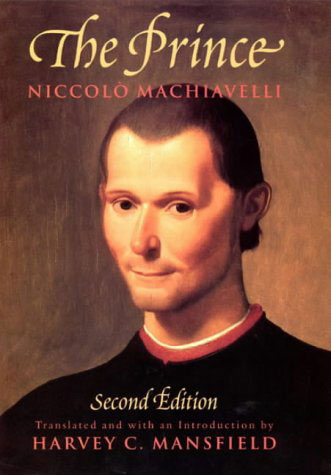
Machiavelli's The Prince is one of the best known political criticisms ever written. In it, the author argues from a calculating and, to some degree, amoral standpoint. Machiavelli believes that in order for an effective ruler to maintain power, he must strike a certain balance between cruelty and benevolence. The ruler must be cruel enough to strike fear into his people, yet kind enough to avoid their enmity. The objective of the ruler should not be to ensure the wellbeing of his people, but rather to secure his own position. To that end, a ruler is justified in using any means necessary to avoid deposition or usurpation. When maintaining power is the primary concern, the consequences of achieving that goal are negligible.

Tuesday, October 21, 2014


Monday, October 20, 2014
History Comic Project Outline
Ryan, Charlotte, Hunter, Jimmy
Mr. Angus
World History II, Period 3
October 17, 2014
History Comic Outline
Start in 1519 with Cortés's expedition to Central America.
Mention burning of the ships.
Talk about difference in technology and aid from other Indians.
Show battle of Tenochtitlán
Mention a religious differences
Show smallpox
Talk about the stench from the demolished city.
Mr. Angus
World History II, Period 3
October 17, 2014
History Comic Outline
Start in 1519 with Cortés's expedition to Central America.
Mention burning of the ships.
Talk about difference in technology and aid from other Indians.
Show battle of Tenochtitlán
Mention a religious differences
Show smallpox
Talk about the stench from the demolished city.
History Comic Project Essential Details
Ryan, Charlotte, Hunter, Jimmy
Mr. Angus
World History II, Period 3
October 17, 2014
History Comic Essential Details
Show Cortés's route
Show them with guns, cannons, and horses
Show support from Indians
Show battle of Tenochtitlán
Show disease
Show the city after the battle
Mr. Angus
World History II, Period 3
October 17, 2014
History Comic Essential Details
Show Cortés's route
Show them with guns, cannons, and horses
Show support from Indians
Show battle of Tenochtitlán
Show disease
Show the city after the battle
History Comic Project Script
Ryan, Charlotte, Hunter, Jimmy
Mr. Angus
World History II, Period 3
October 17, 2014
History Comic Script
In 1519, Cortez sailed to the new world where he encountered and demolished the Aztecs.
Aztec Culture was highly sophisticated, with a developed calendar, a complex writing system, and mathematics.
The Spanish came armed with guns and cannons, weapons which the natives had never encountered.
Shots were fired at natives, who surrendered quickly and gave Cortez's crew goods and an interpreter.
The Spanish converted the natives to christianity wherever possible.
Eventually the Spanish made their way to Tenochtitlán, the capital city of the Aztecs.
Upon their arrival, they were greeted by warmly by the Aztec ruler. While they were being given refreshments by the Aztecs, the explorers turned on their host and practically destroyed the city.
Despite their small number, the Spanish explorers and their superior technology prevailed.
But Cortez's superior technology is only part of the reason that the Spanish were victorious. Unknowingly, they had carried over European diseases which the Aztecs had no immunity to. The diseases, primarily smallpox, devistated the city while leaving most of the Spanish relatively unharmed.
Mr. Angus
World History II, Period 3
October 17, 2014
History Comic Script
In 1519, Cortez sailed to the new world where he encountered and demolished the Aztecs.
Aztec Culture was highly sophisticated, with a developed calendar, a complex writing system, and mathematics.
The Spanish came armed with guns and cannons, weapons which the natives had never encountered.
Shots were fired at natives, who surrendered quickly and gave Cortez's crew goods and an interpreter.
The Spanish converted the natives to christianity wherever possible.
Eventually the Spanish made their way to Tenochtitlán, the capital city of the Aztecs.
Upon their arrival, they were greeted by warmly by the Aztec ruler. While they were being given refreshments by the Aztecs, the explorers turned on their host and practically destroyed the city.
Despite their small number, the Spanish explorers and their superior technology prevailed.
But Cortez's superior technology is only part of the reason that the Spanish were victorious. Unknowingly, they had carried over European diseases which the Aztecs had no immunity to. The diseases, primarily smallpox, devistated the city while leaving most of the Spanish relatively unharmed.
Monday, October 6, 2014
Thoughts and Reflections on: The Human Story, Chapter 10: The New World Falls to the Old One
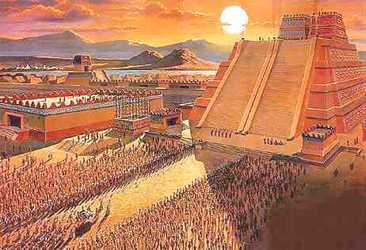
European exploration was one of the first events in history to affect the entire globe. While ushering in an an era of trade, prosperity, and empires for much of Europe, this exploration led to the oppression (and in some cases destruction) of several cultures. Take the Americas for exampl. There the cultures of the Aztecs and Incas thrived for centuries, but they were practically demolished after the arrival of Europeans. Their religion was replaced, their culture destroyed, and their people enslaved. The hardships of the people were so great that the majority of a generation was never born. While this brought further wealth to countries such as Spain and Portugal, in means that that world will never know what these civilizations may have achieved if left to their own devices. The colonization of the Americas is not dissimilar to the actions taken in Africa. There too the locals were enslaved and the treasure of the land taken back to Europe. Various European countries established colonies all over the world, and established themselves as global powers.

Thursday, October 2, 2014
Thoughts and Reflections on: The Human Story, Chapter 9: We Find Each Other
Christopher Columbus stands along Margaret Thatcher and Maximilien Robespierre as one of the most controversial figures in history. On the one hand, his actions led to the near-genocide of people indigenous to the Americas. On the other, Columbus's exploits allowed for the colonization of the New World. No matter what moral stance one takes on this issue, it is impossible to say that Columbs is of little historical significance. The argument is often brought up that he didn't discover anything, but rather inadvertently happened upon a new continent. But Columbus's initial intentions are rendered irrelevant by the impact of his findings. His accomplishment was not discovering the Americas, but rather bringing some knowledge of their existence back to Europe.


Wednesday, October 1, 2014
Defining the Modern Era
Ryan Otto
World History II
October 1, 2014
Mr. Angus
Defining the Modern Era
History by nature is highly contestable, with dozens of contradictory theories on every issue. It is, however, accepted by most historians that human history can be roughly split into three main sections: the Paleolithic era, the Agrarian era, and the Modern era. Of these, the Modern era is the shortest, yet is the period in which the most progress was made. This brief window in history lasting from around 1400 to present day can be defined by a few key components. These are the Industrial Revolution, the rapid advance of technology, globalization, and the rise of Europe.
The Industrial Revolution started in about 1750 and lasted until the beginning of World War I in 1914. During this time, factories were just starting to produce goods on a mass scale. Due to the excessive burning of fossil fuels, mass pollution became a problem for the first time in history. This was the planting of the seed that would eventually grow into climate change. On the other hand, the Industrial Revolution raised human productivity levels drastically, with such inventions as the locomotive and the harnessing of electricity. The massive increase in productivity led to rapid economic growth, primarily in Europe. This economic shift caused a change in global power. The influence of more traditional, agrarian societies such as India and China fell in indirect proportion to Europe and the U.S. There were also huge advancements made in the field of war. The concept of total war, in which virtually all of a nation's resources are devoted to the war effort, became popular. With all this, the Industrial Revolution helped significantly in laying the groundwork for what was to come centuries later.
The Modern era marked the greatest leaps in terms of technology. Among the most influential and game-changing pieces of technology was the printing press. Prior to Gutenberg's marvelous invention, the only books available to most people were bibles copied out by hand by monks. Literacy rates were almost non-existent among the common people, but once mass produced literature became abundant they rose significantly. This fostered the spread of vast amounts of information in a relatively short time, which led to a far more educated public. The modern era also saw the introduction of new forms of transportation such as trains, automobiles, and airplanes, as well as new forms of entertainment. Finally, in the late 20th century, computers came into the picture. In a sense, computers can be thought of as the printing press of the modern age. Personal computers also allowed access to a wealth of information, only to a much greateR degree. In fact, one may go so far as to say that computers have shaped the first decade and a half of the 21st century.
With the rise of productivity, technology, and consumerism came globalization. Globalization is the gradual process by which the world becomes more connected and interdependent. It allows for the seamless transfer of goods, information, and innovations between all parts of the world. Since the 1960s, globalization has, to a certain degree, been shaping the world. It is merging cultures, politics, economics, and ideology into one global society. As may be expected, this comes at the cost of
smaller, more traditional cultures. This merging has sparked some resistance, most notably from the Islamic extremist group Al-Qaeda with the September 11th attacks. Globalization has completely changed the economy, with 'round the clock global trading markets and multinational corporate conglomerates. With the internet connecting the world to an even larger degree, new job opportunities are springing up for those with access to a computer.
At the start of the modern era, the most affluent and powerful countries on the globe were India and China. After a few centuries had passed however, Europe arose as the dominant power in the world, a position which the continent still occupies. When the Industrial Revolution first started, the future of the world economy depended, to an extent, on the location of certain natural resources such as coal. As it happened, many parts of Europe was sitting upon reserves of the necessary resources. With so much innovation and so many resources at Europe's disposal, they quickly became (in their eyes at least) the center of everything. While this is of course a very Eurocentric and biased view for them to take, it is true that Europe has had the greatest impact in terms of culture, technological
innovation, economic growth, and war.
The modern era was the most turbulent period in human history, and as such is very multi-faceted. However, it can essentially be boiled down to a few key features: the Industrial Revolution, technological growth, globalization, and Europe's ascension to a global power. When looking at the past six hundred years, these are the traits and events that shaped the world.

World History II
October 1, 2014
Mr. Angus
Defining the Modern Era
History by nature is highly contestable, with dozens of contradictory theories on every issue. It is, however, accepted by most historians that human history can be roughly split into three main sections: the Paleolithic era, the Agrarian era, and the Modern era. Of these, the Modern era is the shortest, yet is the period in which the most progress was made. This brief window in history lasting from around 1400 to present day can be defined by a few key components. These are the Industrial Revolution, the rapid advance of technology, globalization, and the rise of Europe.
The Industrial Revolution started in about 1750 and lasted until the beginning of World War I in 1914. During this time, factories were just starting to produce goods on a mass scale. Due to the excessive burning of fossil fuels, mass pollution became a problem for the first time in history. This was the planting of the seed that would eventually grow into climate change. On the other hand, the Industrial Revolution raised human productivity levels drastically, with such inventions as the locomotive and the harnessing of electricity. The massive increase in productivity led to rapid economic growth, primarily in Europe. This economic shift caused a change in global power. The influence of more traditional, agrarian societies such as India and China fell in indirect proportion to Europe and the U.S. There were also huge advancements made in the field of war. The concept of total war, in which virtually all of a nation's resources are devoted to the war effort, became popular. With all this, the Industrial Revolution helped significantly in laying the groundwork for what was to come centuries later.
The Modern era marked the greatest leaps in terms of technology. Among the most influential and game-changing pieces of technology was the printing press. Prior to Gutenberg's marvelous invention, the only books available to most people were bibles copied out by hand by monks. Literacy rates were almost non-existent among the common people, but once mass produced literature became abundant they rose significantly. This fostered the spread of vast amounts of information in a relatively short time, which led to a far more educated public. The modern era also saw the introduction of new forms of transportation such as trains, automobiles, and airplanes, as well as new forms of entertainment. Finally, in the late 20th century, computers came into the picture. In a sense, computers can be thought of as the printing press of the modern age. Personal computers also allowed access to a wealth of information, only to a much greateR degree. In fact, one may go so far as to say that computers have shaped the first decade and a half of the 21st century.
With the rise of productivity, technology, and consumerism came globalization. Globalization is the gradual process by which the world becomes more connected and interdependent. It allows for the seamless transfer of goods, information, and innovations between all parts of the world. Since the 1960s, globalization has, to a certain degree, been shaping the world. It is merging cultures, politics, economics, and ideology into one global society. As may be expected, this comes at the cost of
smaller, more traditional cultures. This merging has sparked some resistance, most notably from the Islamic extremist group Al-Qaeda with the September 11th attacks. Globalization has completely changed the economy, with 'round the clock global trading markets and multinational corporate conglomerates. With the internet connecting the world to an even larger degree, new job opportunities are springing up for those with access to a computer.
At the start of the modern era, the most affluent and powerful countries on the globe were India and China. After a few centuries had passed however, Europe arose as the dominant power in the world, a position which the continent still occupies. When the Industrial Revolution first started, the future of the world economy depended, to an extent, on the location of certain natural resources such as coal. As it happened, many parts of Europe was sitting upon reserves of the necessary resources. With so much innovation and so many resources at Europe's disposal, they quickly became (in their eyes at least) the center of everything. While this is of course a very Eurocentric and biased view for them to take, it is true that Europe has had the greatest impact in terms of culture, technological
innovation, economic growth, and war.
The modern era was the most turbulent period in human history, and as such is very multi-faceted. However, it can essentially be boiled down to a few key features: the Industrial Revolution, technological growth, globalization, and Europe's ascension to a global power. When looking at the past six hundred years, these are the traits and events that shaped the world.
Sunday, September 21, 2014
History of Wine Presentation
https://docs.google.com/a/dawsonstudents.org/viewer?a=v&pid=explorer&srcid=0B-pS5kUBR1ScZUxpNzlLN0hlV1k
Thursday, September 11, 2014
Thoughts and Reflections on The rigin of the Modern World
When looking at history, it seems to be primarily dominated by Europe. Every other continent seems to be in the state it's in because of European colonization or influence. Everything is painted as being in reaction to Europe. That basically sums up the Eurocentric belief. Western culture arose in Europe two centuries ago, the industrial revolution happened, a that was that. But this version of events is extremely narrow and limiting. It implies that the rise of Europe was inevitable. The only reason that parts of Europe prospered so much was that they had access to the resources they needed such as coal. The rise of Europe as the figurative center of the world was highly contingent and coincidental. In accepting that the rise of Europe was not, in fact, inevitable, we accept that the continued power of Europe is not ensured.
Friday, August 29, 2014
Ryan Otto's Book Search
Link to my book search project blog: http://modernworldhistorybooksearch.blogspot.com
Thoughts and Reflections on Hot, Flat, and Crowded
Two of the most contentious and threatening issues of the day are climate change and overpopulation. In his book Hot, Flat, and Crowded, Thomas Friedman outlines how we are entering the Energy Climate Era, and the decisions which must be made over the next few years. Friedman suggests that we have entered an era in which we will need to choose what to do about the growing problem of climate change, and asserts that if we do nothing the effects we be irreversible. He also dwells on the growing population, providing statistics which show that the population has tripled since his birth. This is due to the growing availability and effectiveness of medicine. If this trend of population growth continues as projected, then our natural resources will be all but depleted in the coming decades.


Thursday, August 28, 2014
Thoughts and Reflections on Globalization
Globalization has been one of the hottest buzzwords of the past decade. Almost paradoxically however, the definition of globalization is still frequently contested by experts in the field of Global Studies. The catch 22 that one runs into when trying to define it is that it is such a multifaceted and abstract concept that experts have a tendency to only focus on one aspect of it. However, if one gets too broad in their definition, the word loses specificity and to some degree, meaning. Simply put, Globalization is the growing economic, political, and cultural interdependence being established around the world and the growing consciousness of the world at large. Assuming for the sake of argument that this definition is correct, this paints a picture of a growing homogenization and to some degree westernization of the world as a whole. Skeptics and critics of globalization say that the world has been more or less this connected for centuries. While they are partially correct in that globalization has, up until recently, been a slow and ongoing process, it can be seen that over the past few decades the process has seen a dramatic increase in pace. European colonization around the globe was a perfect example of globalization, as it introduced both parties to new technologies, many of which were adopted. The establishment of international commerce was also an early demonstration of globalization. It is undoubtedly a process which has been going on for centuries, but the relatively recent introduction of the internet has sped up globalization considerably in that it is now possible for a huge amount of the population to access virtually any information at any time. Though globalization started centuries ago, the very nature of it has shifted in the modern world.


Subscribe to:
Comments (Atom)