Thursday, October 30, 2014

History Comic List of Images

Ryan, Charlotte, Hunter, Jimmy
Mr. Angus
World History II, Period 3
October 17, 2014


List of Images

- Mexico (maps)

- Aztecs 

- Spanish explorers (trade with aztecs) 

- Smallpox (not pictures of it)

- War (or butchery)

- Religious Differences

- Guns and stuff (look below)

- Horses and stuff (guns, germs, and steel)

- Cannons

- Natives doing stuff

- Tenochtitlán (probally with natives doing stuff)

History Comic

Ryan, Charlotte, Hunter, Jimmy
Mr. Angus
World History II, Period 3
October 17, 2014


Sunday, October 26, 2014

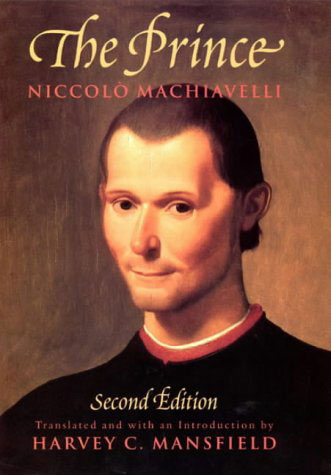
Thoughts and Reflections on: athe Prince Summary and Analysis

     Machiavelli's The Prince is one of the best known political criticisms ever written. In it, the author argues from a calculating and, to some degree, amoral standpoint. Machiavelli believes that in order for an effective ruler to maintain power, he must strike a certain balance between cruelty and benevolence. The ruler must be cruel enough to strike fear into his people, yet kind enough to avoid their enmity. The objective of the ruler should not be to ensure the wellbeing of his people, but rather to secure his own position. To that end, a ruler is justified in using any means necessary to avoid deposition or usurpation. When maintaining power is the primary concern, the consequences of achieving that goal are negligible.


Monday, October 20, 2014

History Comic Project Outline

Ryan, Charlotte, Hunter, Jimmy
Mr. Angus
World History II, Period 3
October 17, 2014

                                                              History Comic Outline
Start in 1519 with Cortés's expedition to Central America.
Mention burning of the ships.
Talk about difference in technology and aid from other Indians.
Show battle of Tenochtitlán
Mention a religious differences
Show smallpox
Talk about the stench from the demolished city.

History Comic Project Essential Details

Ryan, Charlotte, Hunter, Jimmy
Mr. Angus
World History II, Period 3
October 17, 2014

                                                          History Comic Essential Details
Show Cortés's route
Show them with guns, cannons, and horses
Show support from Indians
Show battle of Tenochtitlán
Show disease
Show the city after the battle

History Comic Project Script

Ryan, Charlotte, Hunter, Jimmy
Mr. Angus
World History II, Period 3
October 17, 2014

                                                            History Comic Script

In 1519, Cortez sailed to the new world where he encountered and demolished the Aztecs.
Aztec Culture was highly sophisticated, with a developed calendar, a complex writing system, and mathematics.
The Spanish came armed with guns and cannons, weapons which the natives had never encountered.
Shots were fired at natives, who surrendered quickly and gave Cortez's crew goods and an interpreter.
The Spanish converted the natives to christianity wherever possible.
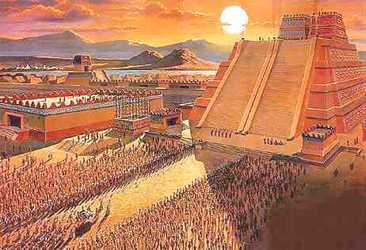
Eventually the Spanish made their way to Tenochtitlán, the capital city of the Aztecs.
Upon their arrival, they were greeted by warmly by the Aztec ruler. While they were being given refreshments by the Aztecs, the explorers turned on their host and practically destroyed the city.
Despite their small number, the Spanish explorers and their superior technology prevailed.
But Cortez's superior technology is only part of the reason that the Spanish were victorious. Unknowingly, they had carried over European diseases which the Aztecs had no immunity to. The diseases, primarily smallpox, devistated the city while leaving most of the Spanish relatively unharmed.

Monday, October 6, 2014

Thoughts and Reflections on: The Human Story, Chapter 10: The New World Falls to the Old One

    European exploration was one of the first events in history to affect the entire globe. While ushering in an an era of trade, prosperity, and empires for much of Europe, this exploration led to the oppression (and in some cases destruction) of several cultures. Take the Americas for exampl. There the cultures of the Aztecs and Incas thrived for centuries, but they were practically demolished after the arrival of Europeans. Their religion was replaced, their culture destroyed, and their people enslaved. The hardships of the people were so great that the majority of a generation was never born. While this brought further wealth to countries such as Spain and Portugal, in means that that world will never know what these civilizations may have achieved if left to their own devices. The colonization of the Americas is not dissimilar to the actions taken in Africa. There too the locals were enslaved and the treasure of the land taken back to Europe. Various European countries established colonies all over the world, and established themselves as global powers.

Thursday, October 2, 2014

Thoughts and Reflections on: The Human Story, Chapter 9: We Find Each Other

     Christopher Columbus stands along Margaret Thatcher and Maximilien Robespierre as one of the most controversial figures in history. On the one hand, his actions led to the near-genocide of people indigenous to the Americas. On the other, Columbus's exploits allowed for the colonization of the New World. No matter what moral stance one takes on this issue, it is impossible to say that Columbs is of little historical significance. The argument is often brought up that he didn't discover anything, but rather inadvertently happened upon a new continent. But Columbus's initial intentions are rendered irrelevant by the impact of his findings. His accomplishment was not discovering the Americas, but rather bringing some knowledge of their existence back to Europe.

Wednesday, October 1, 2014

Defining the Modern Era

Ryan Otto
World History II
October 1, 2014
Mr. Angus
                                                                 Defining the Modern Era
     History by nature is highly contestable, with dozens of contradictory theories on every issue. It is, however, accepted by most historians that human history can be roughly split into three main sections: the Paleolithic era, the Agrarian era, and the Modern era. Of these, the Modern era is the shortest, yet is the period in which the most progress was made. This brief window in history lasting from around 1400 to present day can be defined by a few key components. These are the Industrial Revolution, the rapid advance of technology, globalization, and the rise of Europe.
     The Industrial Revolution started in about 1750 and lasted until the beginning of World War I in 1914. During this time, factories were just starting to produce goods on a mass scale. Due to the excessive burning of fossil fuels, mass pollution became a problem for the first time in history. This was the planting of the seed that would eventually grow into climate change. On the other hand, the Industrial Revolution raised human productivity levels drastically, with such inventions as the locomotive and the harnessing of electricity. The massive increase in productivity led to rapid economic growth, primarily in Europe. This economic shift caused a change in global power. The influence of more traditional, agrarian societies such as India and China fell in indirect proportion to Europe and the U.S.  There were also huge advancements made in the field of war. The concept of total war, in which virtually all of a nation's resources are devoted to the war effort, became popular. With all this, the Industrial Revolution helped significantly in laying the groundwork for what was to come centuries later.
      The Modern era marked the greatest leaps in terms of technology. Among the most influential and game-changing pieces of technology was the printing press. Prior to Gutenberg's marvelous invention, the only books available to most people were bibles copied out by hand by monks. Literacy rates were almost non-existent among the common people, but once mass produced literature became abundant they rose significantly. This fostered the spread of vast amounts of information in a relatively short time, which led to a far more educated public. The modern era also saw the introduction of new forms of transportation such as trains, automobiles, and airplanes, as well as new forms of entertainment. Finally, in the late 20th century, computers came into the picture. In a sense, computers can be thought of as the printing press of the modern age.  Personal computers also allowed access to a wealth of information, only to a much greateR degree. In fact, one may go so far as to say that computers have shaped the first decade and a half of the 21st century.
     With the rise of productivity, technology, and consumerism came globalization. Globalization is the gradual process by which the world becomes more connected and interdependent. It allows for the seamless transfer of goods, information, and innovations between all parts of the world. Since the 1960s, globalization has, to a certain degree, been shaping the world. It is merging cultures, politics, economics, and ideology into one global society. As may be expected, this comes at the cost of
smaller, more traditional cultures. This merging has sparked some resistance, most notably from the Islamic extremist group Al-Qaeda with the September 11th attacks. Globalization has completely changed the economy, with 'round the clock global trading markets and multinational corporate conglomerates. With the internet connecting the world to an even larger degree, new job opportunities are springing up for those with access to a computer.
     At the start of the modern era, the most affluent and powerful countries on the globe were India and China. After a few centuries had passed however, Europe arose as the dominant power in the world, a position which the continent still occupies. When the Industrial Revolution first started, the future of the world economy depended, to an extent, on the location of certain natural resources such as coal. As it happened, many parts of Europe was sitting upon reserves of the necessary resources. With so much innovation and so many resources at Europe's disposal, they quickly became (in their eyes at least) the center of everything. While this is of course a very Eurocentric and biased view for them to take, it is true that Europe has had the greatest impact in terms of culture, technological
innovation, economic growth, and war.
     The modern era was the most turbulent period in human history, and as such is very multi-faceted. However, it can essentially be boiled down to a few key features: the Industrial Revolution, technological growth, globalization, and Europe's ascension to a global power. When looking at the past six hundred years, these are the traits and events that shaped the world.