Thursday, April 20, 2017

Conference on World Affairs Discussion

          At the 2017 CU Boulder Conference on World Affairs, I attended two panels. The first was a general discussion on food entitled Why Food Matters; Nourishing Our Bodies and the Land. The panel was headed by Rick Bayless, Debra Eschmeyer, and moderated by Sheila Dietrich. Bayless, a renowned chef known for using locally and organically produced ingredients in his restaurants, emphasized the importance of viewing food as sustenance instead of as fuel (though I never fully grasped what this all important distinction was exactly). He asserted that our bodies can only truly thrive when our food is connected to our past. In other words, if your heritage does not include a culture that makes burritos, don't eat burritos. I found this claim fascinating, but he didn't give any scientific evidence to support it. Eschmeyer focused most of her time on creating more sustainable agricultural practices, particularly on incorporating local ingredients into school lunch programs and getting kids invested in growing their own food. The panelists also shared their thoughts on the future of sustainable agriculture, discussing the use of such technologies as hydroponics and vertical farming. 
          The other panel which I attended was called How Damaged is America's Worldwide Reputation? The panel was comprised of Kinan Azmeh, Amar Bakshi, Peter Rupert Lighte, and Shadia Marhaban. Nikhil Mankekar served as the moderator. The speakers all presented their unique perspectives on the reputation of the U.S. in their home countries. One panelist from Indonesia commented that the most prevalent image of the United States in her country was not of politics but of Hollywood. That said, most of the panelists seemed to agree that recent moves on the international stage such as Trump's travel ban have not helped to create an ideal image of America. Another topic which came up was the general lack of initiative on the part of Americans to take a stance on the plight of Palestinians. The conclusion seemed to be that although America's reputation has been tarnished by recent political events, these are not the only factors that contribute to our international standing. 

Thursday, April 13, 2017

Thoughts and Ruminations on Chapter 11, Swine of Our Times, and The Oil We Eat

What has been the impact of agriculture on the natural order of the world?
          In the 10,000 years since humans adopted the practice of cultivating their food instead of foraging for it, the natural world has been significantly contorted. The First Agricultural Revolution led to humans consuming a disproportionate amount of energy. Today, humans consume around 40% of Earth's primary productivity, in part by our vast production of pants but also by our extensive destruction of forests for agricultural purposes. The impacts of agribusiness on the natural world is staggering. Just look to the practices of hog farms in the United States, who keep conditions so crowded for their hogs that they have to artificially inseminate their sows to prevent the spread of disease. Farmed hogs have also become shockingly genetically uniform, making them more susceptible to disease. This problem is exacerbated by the growing resistance of certain diseases to antibiotics, which are added to the hogs' feed. Apart from the impact on domesticated animals, the energy requirements of our current model of agriculture are so severe that they are changing the climate of the planet. Excessive carbon emissions from livestock warm the planet, acidity the oceans, and raise sea levels. This problem is compounded by the mass deforestation that supplies the land needed for these practices. There is no doubt that human agricultural activity over the last 10,000 years, and most acutely over the last 50, has fundamentally upset nature. 

Investigative reporters wanted to expose the conditions within factory farm, but big agro has deep pockets. So, the Iowa state legislature made it illegal for reporters to take jobs at factory farms for journalistic purposes. 

Monday, April 10, 2017

Food, Inc. Review

In the 2009 documentary "Food, Inc.", the film's crew seeks the opinions of industrial farmers, organic farmers, big agricultural representatives, and consumer safety advocates to explain the current system of agriculture within the United States. This film brings to light many troubling aspects of the way we feed our country, from the appallingly cruel and unsanitary conditions of factory farms to the abusive business practices of agriculture giants such as Monsanto. The crew interviews a number of farmers, both factory and organic, who attest to the far reaching harms of factory farming such as antibiotic resistance and E. coli outbreaks. One of the challenges that the film crew faced was obtaining interviews with farmers about the industry, as there are heavy legal restrictions placed on speaking out against it. Filming inside factory far,S was also very difficult for the team, as was obtaining interviews with representatives of the largest companies in big agro. "Food, Inc." also addresses the extremely close ties between agriculture and the agencies that are supposed to regulate it. The film reports that many former executives of the largest agricultural conglomerates go on to hold high offices in agencies such as the FDA and the EPA. Unsurprisingly, these former executives champion policies that give a tremendous advantage to big agro, such as high corn subsidies and ad-gag laws that prevent negative press about the industry. 

Thursday, March 16, 2017

Chapter 10 Blogpost

We chose the county Huerfano because during our extensive research about the areas in need of the most assistance in Colorado, it was initially amongst the neediest. However, the need for reform in Huerfano became much more clear when we looked into the statistics within the categories of teen pregnancy, unemployment, college degrees, literacy, and per capita income. Huerfano has a significant correlation between all of the aforementioned areas and the poverty in the area. 

For example, Huerefano boasts a teen pregnancy rate of 41.7%, an unemployment rate of 10%, an illiteracy rate of 15%, and only has 28% of its inhabitants with a college degree. (These statistics can be found within a chart and graphs as well, compared to that of other counties.)
 
There are a series of categories which are essential in determining the necessity of development in a community. Communications, such as access to the internet and good phone systems are a very vital way to determine the level of economic development. Also literacy rates and infant mortality rates are important indicators. If a community’s literacy rate is low and their infant mortality rate is high, then this is a red flag to academics who study development within populations that an area needs help. These categories are all important parts of determine the level of development in a country.

While some might assume that since a county is in great need of development that they boast troubling statistics in ALL categories, this assumption would be false. The United States in its entirety is ranked in the mid 20’s in the world in infant mortality rates, which is due to the great divide in the country between those who are very poor and don't have access to the best pre-natal health care, and those who can afford to be regularly seen by their prenatal doctor. Having mentioned this divide in the country, it is important to note that just because the country has a certain rating based on its statistics, that Huerfanos rate had the possibility of being much different. In fact, it was much different. But not in the way one might expect when looking at the statistics for Huerfanos development. It’s infant mortality rate came in at a whopping 0%, with only 54 births in the calendar year of 2015.

We as a group feel that the most important factor in determining the the necessity of development in today’s modern society within a very well developed country is the per capita income. While this alone is not an indicator of poor development, the way the per capita income is distributed does indicate low development in cases where the PCI is not profoundly low. While the other indicators of reform are often present in underdeveloped countries, we feel that low PCI directly correlates to poverty in Huerfano, and further accentuates the need for development reform in the county. Huerefano boasts a PCI of $23,467. While we are unable to directly prove that the entirety of Huerefano is in poverty, it does become more clear that there is a great divide in the prosperity of Huerefano when you look at the average annual salaries of men and women. Whichever statistic you choose to look at, both are vastly higher than the PCI, indicating that there is an incredibly large amount of unemployed population who are living in poverty within city limits.

A glaring red flag in Huerfano is that women are clearly undervalued. This is a clear sign of an undeveloped society, with a wage gap of around $12,000 on average.  As previously discussed in class, gender inequality is both a barrier to development as well as a social condition that hampers development. It is not something to be taken lightly, especially in the face of the statistics in Huerefano. 

Male salaries are at an average of $50,918 annually, while female salaries sit at an average of $38,528. Not only is the wage gap an issue, but when compared to the PCI, we are able to clearly infer poverty in Huerefano because the wealth distribution is so unequal.

We also researched the employment in Huerfano. While we made a graph on the unemployment in this county (please see graph below), we wanted to look into those who are in fact employed in the area. Having discussed primary, secondary, and tertiary sectors, we looked further into these sectors and found the following: 6.2% of people work in the primary sector, 39.2% work in the secondary, and 54.8 work in the tertiary. 

One of the most popular majors in the county is land use planning, management, and development. This shows that most people in the county are gearing up to enter the workforce to manage the primary sector, showing that there are already a great amount of people actually working in the primary sector, and now people are seeking to manage this work. Compared to other counties in the area that we deemed to be deserving of help, Huerefano fell relatively in the middle with their percentages on this portion of the chart. It really was important for there to be a balance within 

Based on all of the above factors, we have determined that Huerefano is in the deepest need of help. Huerefano is at a stage in development where help is most urgent, because they are relatively developed, just are behind in social practices and some economic areas. The interesting thing in discussing which areas in a country like the United States needs help developing is that the country as a whole is relatively developed. There is running water and a road or a sewage system amongst other staples of basic infrastructure almost everywhere you turn. However, there is a great divide in the country and while some places are completely urbanized and developed, otherwise have not experienced the same flourishing. We have determined that Huerefano requires the most help due to the aforementioned issues.

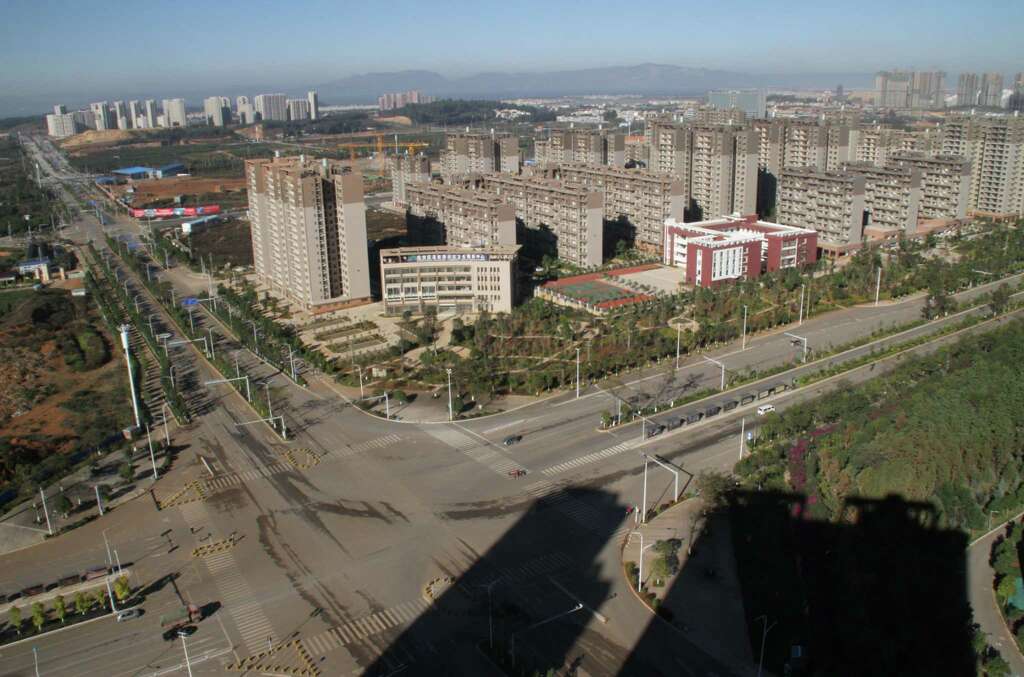
The Chinese government wanted to foster development through urbanization, so they constructed massive urban areas. But currently, many of these huge blocks of urbanized space are completely uninhabited. http://www.dw.com/en/what-has-become-of-chinas-ghost-cities/a-36525007


Per capita GDP of Italy in 2008 in thousands of Euros 


Thursday, February 23, 2017

Thoughts and Ruminations on Chapter 9

Here's how the federal government made the maps that crippled black neighborhoods:

          The persistent racial segregation found in many American cities can be traced back to policies intended to create just that. The practice of redlining (refusing to give loans to inhabitants of a specific area) significantly restricted the upward mobility of African Americans, who were the primary targets. By effectively removing the possibility of investment in predominantly black communities, redlining has maintained social stratification along racial lines. 


America's Great Fitness Divide:

          Income inequality in the United States produces obscene differences in the quality enjoyed by different economic classes. Among these differences is physical health. While being wealthy is not a prerequisite to being healthy, there is nevertheless a strong positive correlation between fitness in cities and income per capita. This suggests that, to some degree, our physical health may be related to our choice of city. 


Mapping the Great Housing Divide:

          Gentrification is a glaring contradiction. On the one had, it raises property values and adds upscale additions to previously run down neighborhoods. On the other hand, gentrification raises the cost of living to such a degree that many families are forced off of the property. This created an environment in which excess walks hand in hand with squalor. 


Burying a 1950's Planning Disaster:

          Our cultural landscape is dynamic, reflecting the needs and priorities of those who construct it. In the 1950s, when city planners adhered to the notion that urban highways were necessary for traffic, the cultural landscape of many urban centers became marked with constantly jammed asphalt roads. Now, as we reconsider the impacts of these highways, it looks as though many may be removed from urban centers. 


People in Brazil wanted to find better opportunities, so many migrated to urban centers in the Amazon. But the swell in population required these cities to expand, contributing to the devastating deforestation of the Amazon.  http://www.nytimes.com/2012/11/25/world/americas/swallowing-rain-forest-brazilian-cities-surge-in-amazon.html


Map of connectedness in Spain 


Wednesday, February 22, 2017

Power, Faith, and Fantasy Post #4 Pages 155-176

          In Antebellum America, a strong restorationist movement prompted American interest in the Middle East. Americans viewed it as their duty to help Jews establish an independent state in Palestine. They also considered it within their purview to "civilize" the Middle East, primarily through means of conversion to Christianity. Optimistic U.S. born missionaries established the route and itinerary which most American travelers in the Middle East adhered to. Driven by religious zeal and enticed by the often dismal but nonetheless compelling writings of early American travelers, tourists began to visit Arab cities such as Cairo, Jerusalem, and Petra. But tourists were almost always appalled at what they perceived as the brutishness of Arabic culture, though steadfastly refusing to acknowledge the gross injustice of slavery that was common practice in their homeland. This increased exchange between the United States and the Middle East left tangible cultural impacts on both regions. Among those that toured the holy sites of the Middle East were celebrated authors and artists, including Herman Melville and Washington Irving. Their experiences abroad impacted their art and writing, and in doing so disseminated a touch of Middle Eastern culture to the American people. 


Image source: http://www.tabletmag.com/wp-content/files_mf/melville_jerusalem_081412_620px.jpg
Wednesday, February 15, 2017

Thoughts and Ruminations on Chapter 8, Lines in the Sand, This is What America would look like without gerrymandering, and Crossing the Mexican-American border every day.

How does the drawing of borders by intellectuals of statecraft affect people's every day lives?

           The way in which we draw our maps influences quality of life at almost all scales. In Africa for example, where states' borders are the legacy of profit-driven European colonialism, members of many different nations are clumped together in arbitrarily delineated territories. The current map of the Middle East is, to a lesser degree, the product of this system of European apportionment. Apart from bringing various ethnic and religious groups into conflict with one another, the current geography of the Middle East deprives certain peoples, such as Kurds and Palestinians, of their own sovereign states. The drawing of maps can have less obvious but highly significant impacts on democracy. The practice of gerrymandering in the United States allows politicians to isolate certain voting demographics in ways that benefit their party. By drawing congressional districts, intellectuals of statecraft are able to influence the outcomes of elections and by extension influence policy that may impact millions of people. National borders can also impact people by restricting where they can live and travel based on their country of origin. The arbitrary boundaries given to each independent state have tangible impacts on the lives of innumerable citizens across the world, and create an imbalance of power in both geopolitical and private spheres. 

Kurds wanted to reclaim territory along Syria's Turkish border from the Islamic State, but Turkey feared that this would encourage the formation of a Kurdish state. So, Turkey proclaimed that they would forcibly oppose the formation of such a state.

Benedict Anderson, Man Without a Country - Renowned Benedict Anderson, who famously asserted that nationalism is a centripetal force within countries, has passed away. Born into an Anglo-Irish family in China, he had no real homeland until he adopted Indonesia as his home country. 


Texas is Turning Blue - Texas's recent growth consists primarily of minority groups that consistently vote democrat. If this trend continues, it is likely that new majority-minority districts will pull the state left and deprive the Republican Party of their most valuable state in presidential elections. 


Lines in the Sand - After WWI, England delineated arbitrary geometric boundaries in the Middle East with little regard for existing nations. These boundaries have contributed to the near constant unrest of the region. 


Gerrymandering Solved - The problem of gerrymandering, in which politicians draw district lines in order to benefit their party, could be solved by a computer algorithm that draws unbiased districts. But political interests make it unlike that politicians will willingly surrender their power to draw districts. 


Map of supranational organizations in Euerope


Monday, February 13, 2017

Power, Faith, and Fantasy Post #3 - Pages 76-104

          After the United States emerged victorious from the Barbary Wars, hostilities between the two regions ceased and trade flourished. The wars left in their wake a more cohesive and military-capable Union. The newfound stability between the U.S. and the Middle East prompted a wave of American missionaries to crush upon the region. The missionary movement began slowly in 1819, but was greatly spurred on by the Great Awakenings of the 19th century. American protestants felt a kinship with the Jewish faith, which lent a Zionist undercurrent to the movement. Many Christians in the United States felt an obligation to evangelize Jews in an effort to bring peace to the world through shared faith. Despite their zeal, American missionaries were largely unsuccessful at converting the population of the Middle East. But they were the first group other than merchants to normalize travel to that part of the world. Religious travel to Jerusalem greatly increased in 1831 when King Mohammed Ali of Egypt claimed the territory from the Ottoman Empire and relaxed laws restricting religious freedom. American missions to the Middle East in the 19th century reflect the intense religious fervor of the time and set the stage for future U.S.-Middle East interactions. 

Monday, January 23, 2017

Thoughts and Ruminations on Chapter 7, Thomas Jefferson and the fascinating history of Founding Fathers defending Muslim rights, Israel Arab Conflict, and Religious Conflict in the Middle East

To what degree are religious differences the basis for conflict in the Middle East?
        The idea that humans need religious tolerance in order to peacefully coexist is by no means new, but it has yet to be fully adopted. John Locke advocated strongly for religious freedom in the 17th century, and his legacy was continued by the founding fathers of the United States, particularly Thomas Jefferson. But in the Middle East, religion continues to serve as one of the primary reasons, or at the very least pretexts, for war. Violent interfaith and intrafaith clashes result in daily casualties to inhabitants of the region. But while many of these conflicts have much to do with religion, there are political and territorial aspects to them as well. Even though much violence in Israel is carried out in the name of a holy war, Israel's inhumaine treatment of people in the Gaza Strip is also a major source of conflict. And while Islamic extremism continues to devastate the world, it likely would not be so rampant had the West not gotten itself so involved in the Middle East. But in the end, most of these reasons are tightly connected to religion. As Israel was created specifically as a Jewish state, all conflict stemming from its establishment is inherently rooted in religion. And as many governments in the Middle East are strongly tied to religion, political and territorial disputes are often at least partially based in faith. 

The United States wanted an ally in the Middle East, so it gave its near unconditional support to Israel. Then, the U.S. invaded Iraq and turned a blind eye to atrocities committed by Israel, deeply tarnishing its international reputation. 

Tuesday, January 17, 2017

I Am Now an Ordained Minister

Book Post #2

          The first major interactions between the nascent United States and ill defined Middle East were not friendly. In the North African territories of Algiers, Tunis, and Tripoli (commonly known as the Barbara's States), American merchant vessels were being commandeered and their sailors were taken hostage. The Barbary States demanded that countries wishing to guarantee the safe passage of their ships pay tribute. President Thomas Jefferson determined that to continue to pay tribute would set a dangerous precedent. In May of 1801, Tripoli declared war on the U.S. In response, Congress gave Jefferson authority to direct forces against the Barbary States, though the U.S. never officially declared war. Jefferson sent six frigates to protect American vessels, and after a number of naval engagements in Tripoli, the a peace treaty was reached with the Pasha of Tripoli. However, this did nothing to stop pirates from Algiers and Tunis. In 1815, Congress authorized naval squadrons to be deployed to Algiers. Again the U.S. engaged in small scale naval warfare with the Barbary States, and by July they had forced the Barbary States into negotiations. The outcome was that the Barbary States agreed to end its piracy against the U.S., to release all American captives, and to pay $10,000 in compensation for pirated goods. 

Thursday, January 12, 2017

Thoughts and Ruminations on Chapter 6, Where Languages Go to Die, Where English Words Come From, and How America's Wars Have Changed the English Language

What factors determine shifts in how we communicate verbally? 
     There are many ways in which language can morph over time, from changes in sound and pronunciation to the introduction of new vocabulary and consequently new ideas. As a certain language is spread throughout the world, be it through the rise of empires of simple mercantilism, it is changed by those who adopt it. The farther a language travels from its hearth, the more pronounced the change will be. When two isolated areas speak the same language, sound shifts and differences in vocabulary will result in two separate dialects. Is process is known as language divergence. Changes in vocabulary occur not only over distance, but over time as well. This change is reflected in the vernacular introduced to American English by soldiers during periods of war. Languages are also changed by frequent interactions with other languages. As our world globalizes, so to do our languages. As English is the dominant lingua franca in business, certain English words have become commonplace in other tongues. 

Professor Pamela Munro wanted to revive the dead Native American tongue of Tongva, so she researched existing material to compile a Tongva dictionary. 

Map of Natvive American languages in California:

Wednesday, January 4, 2017

Yugoslavian Civil War Project

The Yugoslavian Civil War was the culmination of many conflicts underlying the Yugoslavian state. Nationalist feelings had been growing among the different republics of Croatia for some time, and Tito's death in 1980 provided the spark necessary to ignite these tensions. 
Croatian nationals who had been suppressed under Tito's rule suddenly found themselves with an opportunity to press their separatist agenda. Serbian nationalism also flourished, largely as a result of Serbian migration. Serbs who migrated out of Serbia did not enjoy the same protections afforded to ethnic minorities within Serbia, which caused immense resentment. The root cause of this nationalism, explains Dr. Marco Babić of the University of Warsaw, is difference in language. One of the functions of language is demarcation, so the presence of so many dialects in a single state led to the stratification of groups by language. Thus, differences in language and ethnicity were primarily what gave rise to nationalism in the various sectors of Yugoslavia. The ethnic strife felt throughout Yugoslavia was exacerbated by declining economic conditions, partially a result of the policies implemented by the IMF. In 1990 the Yugoslavian communist party was divided along ethnic lines, fragmenting any remaining sense of political unity. In 1992, Bosnian calls for independence sparked a violent reaction from Bosnian Serbs. To protest this, Bosnian Serbs began rounding up Muslims, whom they had for many years identified against, and executing them. This specific targeting of a minority shows how racism fueled the civil conflict.       

                    
Of the ethnic groups that inhabit what was once Yugoslavia, the main group is Slavic that includes Serbians, Croatians, Bosnians, Slovenians, and Macedonians. There are also Italians, Hungarians, Albanians, Turks and Gypsies living in this region.

The causes of the Yugoslavian civil war stemmed effectively from nationalism. The particular concepts to focus on that created this conflict are ethnicity, and the presence of so many ethnic groups in one state. The differing ideologies, religions, and political philosophies of various ethnic groups created an environment in which conflict was inevitable.

    Concept: ethnicity 
Cause: Nationalism
Rank: 1

Yugoslavia had three official languages; Serbo-Croatian, Slovenian and Macedonian. There are also many other non-official languages spoken there. The Cyrillic and Roman alphabets are both used.    

According to Dr. Marco Babic of the University of Warsaw, language is one of the primary roots of nationalism. The civil conflict here stemmed mostly from nationalism, brought about by differences in language, ethnicity, and religion. The presence of both alphabets and the plethora of other languages spoken in the former Yugoslavia contributed to the stratification of ethnic groups. This increased division spawned increased nationalism and political disharmony. 
Concept: language, 
Cause: Politics, nationalism
Rank: 3 

There were three main religions observed in the former Yugoslavia: Eastern Orthodox, Muslim and Roman Catholic.        

The presence of three conflicting religions in the former Yugoslavia resulted in a great deal of conflict, particularly in Kosovo and Bosnia. Opposing religions identify strictly against one another, creating a feeling of otherness toward those of a different faith. Members of different religions were also heavily split among political lines. 

Concept: -Religion, Political Geography
Cause: Religion
Rank: 2

Lifestyles varied drastically in the former Yugoslavia. In the north there are modern cities in the southern valleys life had remained the same for several hundred years.    

Traditional vs. Modern values are typically a massive source of tension, even today. Resistance to change in the face of urbanization divided the former Yugoslavia into an urban population and a rural population. This further fueled the political discord taking place at the time. 

Cause: Traditional vs. Modern values 
Concept:-Political Geography
Rank: 5


5. Bosnia & Herzegovina have over 40 political parties and no predominant nationality. Its 4.4 million people are 40% Muslim, 33% Serbian and 19% Croatian.    

The separation of ideologies and diverse group of factions present in one confined space really fosters an environment prone to unrest. The political geography here is so diverse and broken up into small areas and belief systems that quarrel is inevitable. Each group has its own nationalistic views and national pride, leading to potential disputes.


Concept:-Political Geography
Cause: Politics, nationalism
Rank: 8

6. In 1914 when Bosnia had become an Austro-Hungarian province, the assassination in Sarajevo of Archduke Franz Ferdinand by a Bosnian Serb started the First World War.    

This event, while catastrophic and technically the final straw breaking the tensions amongst world powers and starting the First World War, was not necessarily the last straw in starting the Yugoslavian Civil War. The motives behind the assassination itself stemmed from Serbian nationalism, and overall tensions in 1914. However in this context, the event serves mostly as a mile marker in the past that can be used to argue against ideologies and other stated opinions of other ethnic groups.

Cause: nationalism, politics
Concept:-Ethnicity
Rank: 30 

                                                     7. Muslim and Croats allied themselves in Bosnia.

The alignment of the Muslims and Croats together provided the opportunity for a formidable force, one that's very existence escalated the conflict. The fragile alliance did not last, as the Croats blamed increased Islamic policy for the escalation. 

Cause:Politics,
Concept:-Religion
Rank:    10                                                 

8. Local Serb politicians stated that they would not live in a Muslim state. 

The opinions of political leaders tend to carry a hefty amount of weight amongst the public, and they also tend to convey the beliefs of those whom they serve. This statement was important because it showed the lack of tolerance that remained amongst the Serbs. Religious groups played a big part in this because it was a really large part of the problem--the refusal to live in a Muslim state. 

Cause: Religion, nationalism, politics
Concept:Religion Ethnicity
Rank: 12
    

9. In Croatia, local Serbs believed that fascist Croats would repeat Second World War atrocities.

This belief was important because it pitted different religious groups with different political beliefs as well as moral values against each other. With the precedent being set as it was, the local Serbs has no choice but to believe that what took place in the past would take place once again due to what they already witnessed. This belief was one of the main reasons Serbs called for independence. 
    
Cause: nationalism, politics
Concept:-political and ethnic
Rank: 7
    
10. The EC would not recognize Croatia and Bosnia and Herzegovina's nations because they are not single territories with well-defined populations that are under an undivided control.

The refusal to allow recognition of these nations was important because the EC determined, based off of the political geography, that they were not fitting of the criteria to gain this status. The ongoing strife fueled by nationalism taking place in these semi-independent states prevented political unity. Without well defined populations and a clear political regime, it was difficult to have true government as well as a cohesive unit under the same set of beliefs. Without all of this, it is difficult to receive recognition or respect from other governing bodies. 

Cause: nationalism, politics
Concept:-political geography
Rank:    16


11. The Yugoslavian army was Serbian led and dominated.

As Serbians were prominent in Yugoslavia’s armed forces, much of the Yugoslavian military had a vested interest in protecting and advancing the cause of the Serbs. 


Cause of conflict: Politics
Concept: Ethnicity 
Rank: 6


12. There are several Serbian enclaves in Croatia that the Yugoslavian army has attempted to liberate by fighting. These enclaves were occupied by the army leaving Croatia's international borders unsettled.

The Serbian controlled Yugoslavian military changed the political geography of the region by creating uncertainty about the Croatian border. This further confused already ill-defined borders and added to the conflict between Croatians and Serbs. 


Cause of conflict: Nationalism and Ethnicity
Concept: Political Geography  
Rank: 11


13. In Macedonia Albanian minorities have been mistreated.    

The abuse of religious and ethnic minorities within the former Yugoslavia was what spurred such unrest among various ethnic groups. Under the Macedonian government, Albanians were thoroughly suppressed and assimilated. 

        
Cause of conflict: Ethnicity
Concept: Ethnicity, language
Rank: 25


14. Kosovo, an autonomous province in Serbia has an Albanian majority.

Kosovo was one of the most disputed territories of the entire conflict. Kosovo declared independence largely because of the differences in economic systems and ethnic makeup, and the treatment of Albanian majority as second class citizens. 


Cause of conflict: Ethnicity and Economics 
Concept: Political Geography 
Rank: 9


15. Europeans have blamed the worst of the Croatian - Serbian conflict on Serbia.

The general opinion of a large group of people being negative towards the Serbian involvement in the conflict was not necessarily that important toward what actually transpired. The opinion of an outside group didn’t lead to the civil war, and it was likely formed based off of nationalism and political agenda.

Cause of conflict: Nationalism 
Concept: Ethnicity 
Rank: 31

16. Serbia was landlocked at the beginning to the civil war and wanted to take enough Croatian territory to have access to the sea.

Serbia basically wanted to influence their economy in a positive way by having access to the sea and in turn another trading port. They wanted to redraw the territory in order to give them the rights to the access, and used the civil war as an excuse to try to take the land that they wanted. This would tie into the political geography of how Serbia was originally drawn and then how they wanted it to be drawn.

Cause of conflict: Traditional vs Modern Values, economy 
Concept: Migration and Political Geography 
Rank:13

17. Serbia still favored a communist system and a united Yugoslavia while Croatia favored independence and a free market democratic system.

When two groups clearly diverge and want such drastically different outcomes such as a communist system vs. a capitalist system, there clearly will be a massive conflict. At the heart of this, there is a fundamental difference between groups who differ in opinions about this subject, and with a difference as great as this one, there will be a massive conflict and possible split in order to resolve it.

Cause of conflict: Politics, economics
Concept: Political geography, economy
Rank: 19
 
18. Serbia wanted to create a greater Serbia by carving out enclaves where Serbians lived in Croatia, Bosnia and Herzegovina and adding them to Serbia.

Serbia was clearly inclined to redraw the political geography of the area and was doing so by trying to push their agenda into other areas, and then bringing them all back to be drawn under the umbrella of Serbia as a whole. The nationalism of Serbia was immense, obviously, and steps tried to be taken to bolster their influence both politically, and geographically.

Cause of conflict: Politics nationalism 
Concept: Political geography 
Rank: 14

19. There are in excess of 600,000 war refugees in Yugoslavia.

With the addition of massive amounts of people within the borders of the former Yugoslavia, it would be difficult to continue to enforce laws as well as keep track of so many individuals. It is incredibly hard when borders swell with people, because overpopulation puts strains on nations in countless ways. 

Cause of conflict: Nationalism 
Concept: Migration
Rank: 15

20. Ilok, a village in central Croatia, had a population that was primarily German and Jewish in 1930. One thousand nine hundred Slovaks emigrated to Ilok in the 19th century. Under the Turks, Ilok was a Muslim settlement, previously it was Catholic.

The arrival of a large amount of migrants to Ilok who carried a different belief system than the population previously living there could create a lot of tension in day to day life. Similarly to the concept of succession we have gone over in class and talked about a lot in the book, when one group comes and overtakes another, there are tensions revolving around this kind of situation in Ilok. However, the amount of migrants weren’t necessarily high enough for succession to actually occur, rather, the sentiment of uneasiness was definitely there.

Cause of conflict: Religion and Nationalism 
Concept: Migration 
Rank: 28

21. Croatia's constitutional guarantees for its minorities are weak.

Politically, it is very important to account for all sorts of things. Especially all groups of people living within your state. With Croatia’s lack of care for minorities, it provides an atmosphere in which people feel as though they might not have much left to lose if their rights are being infringed upon, and therefore begin fighting back even stronger against potential opposition and unfair treatment. Basically, the lack of constitutional guarantees left the minorities feeling unappreciated and very much on edge leading up to the civil war conflict.

Cause of Conflict: Politics, Ethnicity
Concept: Political Geography, Ethnicity, Religion
Rank: 17


22. Greeks view Macedonian independence as a claim on their own territory of the same name and have asked Macedonia to change its name.    

The distribution of territory was a strong point of contention throughout the civil conflict. Different political entities with varying interests all vied for the same land, causing rifts between groups. 

Cause of Conflict: Politics, Nationalism
Concept: Political Geography
Rank: 26                                         
    
23. Macedonia will not stay in the Yugoslavian federation without the Croats and Slovenians to check the "bossiness" of the Serbs.

Ultimatums such as this call politics and obviously ethnicity into the discussion. Macedonia’s unwillingness to remain in a political agreement with “allies” of a sort to protect their interests over a group fighting to diminish their prosperity proves that there were some political relations taking place within the federation in order to maintain order and control over the situation, and to keep tensions at a low. These different groups clearly have tensions, however it is important to note that there was a political attempt to quell the feuds.

Cause of Conflict: Politics
Concept: Political Geography, Ethnicity 
Rank: 23


24. Forty percent of Macedonia's population is Albanian. Albanians in Macedonia claim they are treated like second-class citizens. Albanians have voted for autonomy in eastern Macedonia.

The human rights conditions around the world are very important and vital topics of discussion amongst many groups. When certain ethnic groups feel as though they are being treated unfairly, especially based off of political restrictions and actions, then it is clear that this group will probably fight for recognition through their political system. The vote for autonomy in Macedonia speaks to the political involvement and acceptance of nationalism rather than immediate rejection of the state amongst the group, but a clear cry for change.

Cause of Conflict: Nationalism, Politics, 
Concept: Ethnicity 
Rank: 18


25. There is a Serb minority in Macedonia.

The presence of another ethnic minority in Macedonia, a republic known for its discrimination against Albanians, added another set of interests to contend against the other ethnic groups in the region. 

Cause of Conflict: Ethnicity, nationalism
Concept: Ethnicity
Rank: 27

26. Until 1989 Yugoslavia had been a democracy for a total of only eleven years. Yugoslavia also has a tradition of authoritarian rule as a part of the Ottoman Empire, the Austria-Hungary Empire and as a communist state.

A major reason for the civil conflict was political instability. As the former Yugoslavia had only tentative democratic political infrastructure, it was ill equipped to deal with the complex political, ethnic, and religious conflicts that sprung up over the republic. 

Cause of Conflict: politics, nationalism 
Concept: political
Rank: 24


27. During the 1980s the gap between communist economies and capitalist economies became a wide chasm. IN communist nations economic growth was slow, technology backwards and shortages chronic.

When times get hard economically, the nation’s growth and prosperity is often stifled. It’s very difficult to have a prosperous population under communist rule, as capitalism and a free-trade economy are the keys to progress in almost all spheres of society. Watching this shift during the 1980’s was clear foreshadowing to the fate of many nations around the world.

Cause of Conflict: economic
Concept: traditional vs modern
Rank: 21


28. Anti-Semitism was strong in Croatia and Slovakia during the 1930s and 1940s and the Nazis were welcome there. Croats sided with the Germans against the Serbs during the war.

The presence of existing religious and ethnic tensions in the former Yugoslavia fueled the civil conflict. Fear that old wars between groups would be rekindled prompted the action of some factions. 

Cause of Conflict: Religion, politics, and nationalism
Concept: religion, ethnicity
Rank: 22

29. Under Tito the constitution of 1974 protected other republics from Serbian hegemony. Since Tito's death there had been a gradual decentralization of government.

Since Tito passed acts to protect republics from Serbian hegemony when he dies these acts were contradicted and then these acts were overruled. Therefore the people affected by these acts were threatened and had reason to retaliate. When people realized that times were changing, they wanted to take action against the injustices they felt.


Cause of Conflict: Politics
Concept: political geography 
Rank: 18


30. Serbia defeated the Turks in Kosovo in 1389 giving the Serbs a feeling of ownership of the region. However, Kosovo is the cradle of Albanian nationalism in Yugoslavia.

National and ethnic pride gave multiple ethnic groups feelings of sovereignty over certain parts of the former Yugoslavia, leading to frequent border disputes. 

Cause of Conflict: Political geography, nationalism
Concept: ethnicity 
Rank: 20


31. In 1990 the annual inflation rate in Yugoslavia was 2600%. Unemployment was in excess of 20%, the national debt was in excess of $23 billion, internal debt was over $14 billion and personal income had fallen by over 20% over the preceding ten years.

Nations are incredibly more prone to conflict and unrest when their economy is in turmoil. The state in which Yugoslavia found itself in 1990 was far less than ideal, and it contributed to a lot of turmoil on the individual level and even more so on a national level. This allowed for people to slip into poverty, and as they were unable to provide for their families in a continuously declining political state, crisis began to arise.

Cause of Conflict: economics
Concept: Politics
Rank: 4


Sources: http://www.academia.edu/2944230/Language_and_political_destruction._The_case_of_Yugoslavia
http://staff.lib.msu.edu/sowards/balkan/lect25.htm
https://academic.evergreen.edu/g/grossmaz/Yugoslavia1989.jpg

Image sources: 
        
https://thumb1.shutterstock.com/display_pic_with_logo/453337/249512863/stock-vector-racism-word-cloud-concept-vector-illustration-249512863.jpg